

The paraquat lawsuit update for October 2026 centers on a settlement that thousands of plaintiffs accepted and hundreds rejected. With 6,602 cases still pending in the federal MDL, the court is now requiring holdouts to prove their claims early. In this blog, our paraquat lawyers break down where the litigation stands.
At Reich & Binstock, our nationally recognized trial lawyers have extensive experience handling MDL and toxic exposure cases. If you or a family member developed Parkinson’s disease after paraquat exposure, our mass tort attorneys can explain where your claim fits in the current litigation. To schedule a free consultation, call 713-622-7271 or fill out our online intake form today.
Paraquat Lawsuit Update October 2026
The federal paraquat litigation has moved from trial preparation to settlement administration. Syngenta and Chevron reached a master settlement in 2025, a court-supervised fund now processes payments, and Chief Judge Nancy J. Rosenstengel is pushing the remaining nonsettling cases through early proof requirements before any of them can move toward trial.
How Many Paraquat Lawsuits Are Pending?
As of October 1, 2026, the paraquat MDL (In re: Paraquat Products Liability Litigation, MDL No. 3004) had 6,602 pending cases and 8,495 total cases filed since it began, according to the Judicial Panel on Multidistrict Litigation. The gap reflects cases dismissed, withdrawn, or resolved in the Southern District of Illinois.
Federal numbers tell only part of the story. Syngenta reports that 10,911 paraquat lawsuits have been filed in federal and state courts since 2017, according to Swissinfo’s reporting on the settlement. Philadelphia’s Court of Common Pleas alone holds more than 2,000 paraquat cases, the largest state court docket in the litigation.
What Is the Status of the Paraquat Settlement?
The paraquat settlement is in the payment stage for plaintiffs who accepted it. The parties signed a letter agreement in April 2025 and a formal master settlement agreement later that year. In early 2026, the court approved a qualified settlement fund, a court-supervised account that pays claimants once their eligibility is confirmed.
The total settlement amount and individual payouts remain confidential. Syngenta’s interim financial report showed roughly $300 million paid for legal and product liabilities in the first half of 2026, with no breakdown by product. The company continues to maintain that paraquat is safe when used according to its label instructions.
What Happens to Paraquat Plaintiffs Who Rejected the Settlement?
Plaintiffs who rejected the paraquat settlement now face stricter proof requirements. Swissinfo estimates that more than 900 plaintiffs turned down Syngenta’s offers, with refusals concentrated among clients of a handful of law firms. At least three firms reported refusal rates of 80% or higher, which prompted the court to scrutinize those cases more closely.
In mid-2026, Judge Rosenstengel entered Case Management Order No. 25, a Lone Pine order for nonsettling plaintiffs. A Lone Pine order requires plaintiffs to produce basic evidence of exposure, diagnosis, and causation early in the case. The court also ordered depositions and evidence of paraquat use for a sample of opt-out cases.
For many farmworkers, that means rebuilding exposure records from decades ago, including employer files, purchase history, and witness statements. Discovery tools such as depositions and a request for production let both sides test whether each holdout claim can survive. A court-appointed special master also met with holdouts to confirm they understood the risks of declining.
The court continues to monitor the holdout process closely. In a September 11, 2026 order, Judge Rosenstengel canceled a planned conference after the special master reported substantial progress with one plaintiffs’ firm on issues raised in August, and she directed the special master to keep providing periodic updates.
What Is Happening in Philadelphia Paraquat Cases?
Philadelphia remains the most active state court venue for paraquat lawsuits. Judge Joshua Roberts of the Court of Common Pleas oversees more than 2,000 cases and has rejected defense efforts to move out-of-state claims elsewhere. The first scheduled Philadelphia paraquat trial settled on the eve of trial in January 2026, and additional trial settings remain on the calendar.
How Does the Durnell Ruling Affect Paraquat Lawsuits?
The U.S. Supreme Court’s June 2026 decision in Monsanto v. Durnell held that certain state law failure-to-warn claims involving federally registered pesticides are preempted by federal law. Because paraquat and Roundup are regulated under the same federal pesticide statute, defendants are expected to raise similar preemption arguments in paraquat cases.
Durnell does not end paraquat litigation. Claims based on how paraquat was designed or manufactured are not directly affected by the ruling. Plaintiffs with a Roundup lawsuit face the same shift, and practitioners on both sides expect the decision to push the parties toward resolving holdout cases rather than trying them.
Is the Paraquat Lawsuit a Class Action or a Mass Tort?
The paraquat lawsuit is a mass tort, not a class action. Federal cases are consolidated in multidistrict litigation for shared pretrial work like discovery, but each plaintiff’s claim stays legally separate. That is why individual plaintiffs could accept or reject their own settlement offers, and why holdouts can still pursue their cases.
In a class action, one lawsuit represents an entire group and members share a single result. In an MDL, a global settlement typically assigns each plaintiff an offer based on the facts of their case, such as exposure history and diagnosis. Plaintiffs who decline can eventually be sent back to their home courts for trial.
What Happened to the Paraquat Bellwether Trials?

No paraquat Parkinson’s case has reached a jury verdict. A bellwether trial is a test case that shows both sides how juries may respond to the evidence. The first federal bellwether, originally set for November 2022, was postponed repeatedly. In April 2024, Judge Rosenstengel excluded the plaintiffs’ key causation expert, ending the first bellwether group.
New bellwether cases were selected, but trial dates were vacated as settlement talks advanced in 2025. In Philadelphia, defendants settled scheduled trials before juries heard the evidence. For holdout plaintiffs, that pattern matters: cases that survive the court’s early proof requirements may again approach trial, which has repeatedly prompted settlement in this litigation.
Why Is Paraquat Facing Lawsuits and Bans?

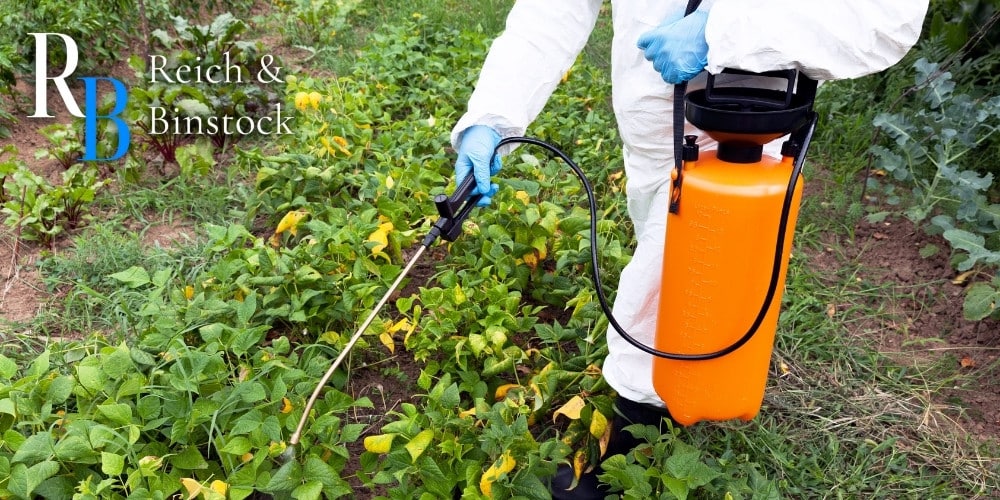
Paraquat is a toxic herbicide used mainly for weed and grass control, according to the CDC, and the EPA restricts its use to licensed, trained applicators. Lawsuits allege that chronic exposure causes Parkinson’s disease and that Syngenta and Chevron failed to warn the farmers and applicators who sprayed it for years.
A 2011 study supported by the National Institutes of Health found that people who used paraquat were 2.5 times more likely to develop Parkinson’s disease than non-users. Researchers believe the oxidative stress paraquat uses to kill plants may also damage the dopamine-producing neurons that Parkinson’s destroys.
Paraquat remains legal in the United States, but its footprint is shrinking. Syngenta announced in March 2026 that it would stop producing paraquat by the end of June, and in August 2026 every registrant canceled its registration with the California Department of Pesticide Regulation.
The European Union has banned paraquat since 2007 and Switzerland since 1989, and China bans domestic use. Because many workers handled it under brand names such as Gramoxone, knowing what products contain paraquat is often the first step in confirming past exposure.
How Long Will the Paraquat Litigation Take?
Plaintiffs who accepted the paraquat settlement are moving through payment processing, though timing depends on each claimant’s eligibility review. For holdouts, the timeline is longer. Their cases must clear the court’s early proof requirements and targeted discovery, and some may be remanded to their home courts before any trial or individual settlement.
Paraquat Parkinson’s lawsuits began gaining traction in 2017, and the federal MDL formed in 2021. With the court now demanding early proof from nonsettling plaintiffs, exposure and diagnosis records matter more than ever. A paraquat lawsuit attorney can review whether your history fits the current litigation.
Contact a Paraquat Lawsuit Attorney Today
At Reich & Binstock, our nationally recognized trial lawyers have handled mass torts, class actions, and multidistrict litigation across the country. If you or a family member developed Parkinson’s disease after paraquat exposure, call a personal injury lawyer on our team at 713-622-7271 or fill out our online intake form for a free, confidential case evaluation.