
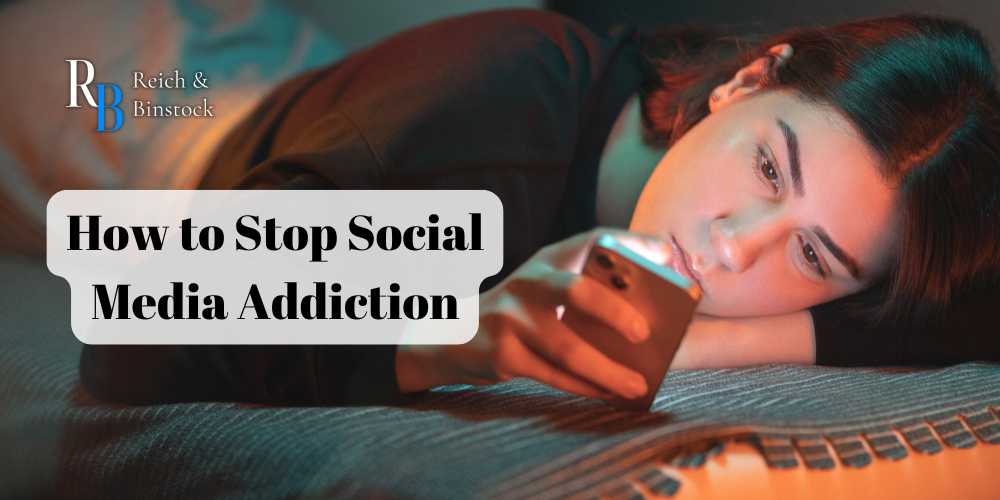
In today’s hyper-connected world, it’s easy to find ourselves glued to our screens, endlessly scrolling through social media platforms. How do you know if you’re hooked or addicted to social media? If you feel like overuse of social media interferes with your thoughts, or if you’re facing other problems stemming from too much time on social media, you may need some pointers on how to stop social media addiction before the concerns become a bigger problem.
Keep reading to learn effective strategies to help you regain control and stop social media from taking over your life.
How to Break Social Media Addiction
If you’ve ever found yourself wondering how to stop social media addiction, you’re not alone. Excessive social media usage can quickly spiral out of control, leading to mental health issues like anxiety and depression. At Reich & Binstock LLP, our Texas social media addiction lawyers understand that the constant pressure to stay connected on social media can take a serious toll on your mental well-being. Understanding how to free yourself from these addictive behaviors is essential for maintaining any relationship with friends and improving your quality of life.
If you believe that you don’t find joy in other activities because of social media addiction, such as if you feel like you’re missing out on living life, for example, you may be able to secure financial support by filing a claim against the companies responsible.
Call Reich & Binstock at 713-622-7271 or contact us online to see if you qualify.
How Can Social Media Be Addictive?
Social media can be addictive because it triggers the brain’s reward system in the same way that drugs do. Every time you use social media apps and receive a like, comment, or message, your brain experiences a surge of dopamine, creating positive reinforcement that keeps you coming back for more. This can turn into a serious social media habit, where excessive or compulsive use becomes the norm.
But why is social media addictive in the first place? Just like with other addictions, the continuous rewards you get from using social media can cause you to rely on it as an important coping mechanism to relieve feelings of stress or loneliness. This dependency can cause negative consequences over time, such as mental health struggles and strained relationships. Recognizing the following signs, like constantly checking social media or feeling anxious without it, is the first step in breaking free from these habits.

Dopamine Feedback Loops from Social Media Usage
Social media platforms are designed to keep us coming back for more, and the secret lies in how our brains respond to the interactions we receive on these platforms. When you use social media, every like, comment, or share acts as a continuous reward. Each time your brain receives these signals, it releases dopamine, a chemical that makes us feel pleasure.
Here’s how it works: as you scroll through social media and get these bits of positive feedback, your dopamine levels increase, and you experience positive feelings. This is because your brain views social networking sites as a source of endless rewards. It’s similar to how we might feel joy from winning a small prize repeatedly.
However, the catch with this dopamine feedback loop is that it can lead to excessive social media use. Over time, you might find yourself spending more time on these platforms to feel the same level of satisfaction. When you’re not using social media, you might even experience withdrawal symptoms, such as feeling restless or unhappy. This cycle can make social media seem like an endless, almost compulsive quest for the next dopamine hit as our brains continue to seek out what makes us feel good.
What Are the Solutions to Social Media Addiction?
Social media addictions can be difficult to overcome because social media is so integrated into our daily lives. However, there are ways to improve your social media habits and your overall well-being.
Licensed therapists may be able to help you cut down on your social media use by providing a safe space to talk about your struggles. Oftentimes, a mental health professional will also help you find an effective treatment approach and schedule recurring visits to keep up with your progress.

8 Ways to Break Social Media Addiction
If you find yourself overly concerned with social networking sites and notice how often you spend time engaging with them daily, you might be dealing with social media addiction.
This addictive use of social media can have negative effects on your mental health and overall well-being. Fortunately, there are steps you can take to break free. Here are eight effective ways to help reduce your social media usage and regain control over your life.
1. Practice mindfulness. Determine your reason for quitting.
Mindfulness is a powerful tool when it comes to quitting social media. Take time to reflect on why you want to cut back on or quit using social media sites. Is it affecting your mental health, relationships, or productivity? Recognizing the reasons behind your problematic social media use can help you stay motivated and committed to spending your time more meaningfully.
2. Disable your app notifications.
Social media app notifications are designed to keep you constantly engaged. Disabling these notifications can significantly reduce the temptation to check your phone every few minutes. Without constant reminders, you’ll find it easier to break the cycle of social media addiction and focus on what truly matters in your day.
3. Set limits on social media apps.
Unlimited access to your social media accounts can quickly lead to excessive time spent scrolling. Setting daily or weekly time limits on how often you check social media can help prevent an endless amount of screen time. Many phones and apps have built-in tools that allow you to manage your usage and keep your social media habits in check.
4. Find a replacement hobby or activity.
Instead of turning to social media, learn a new hobby or find a replacement activity that brings you joy and fulfillment. Whether it’s spending more time with friends and family members, exercising, or learning a new skill, replacing online social networking with real-life connections can help you regain control over your time and improve your overall well-being.
5. Uninstall social media platforms.
Sometimes, the best way to stop social media addiction is to uninstall the social media apps altogether. By removing these platforms from your phone and other devices, you eliminate the temptation to constantly access social media, allowing you to focus on more productive and rewarding activities.
6. Schedule a digital detox.
A digital detox is a planned break from social media usage and other forms of digital distraction. Taking a few days, or even a week, to reset your habits can help stop your social media addiction and reduce the mental strain caused by constant online engagement. If you find it difficult to disconnect, consider seeking guidance from a mental health professional to help you through the process.
7. Put your phone away for work or school.
If you often check social media during work or school, putting your phone away can help you regain control. By keeping your phone out of reach during important tasks, you’ll be less tempted to interrupt your job or school work with unnecessary social media use, leading to improved focus and productivity.
8. Set “no-phone” zones.
Designating certain areas or times as “no-phone” zones, like meal times with family or friends, can help you improve the quality of time spent with others. These moments without distractions allow you to engage and be more present, rather than being preoccupied with social networking sites during important interactions.

Are You Suffering from Social Media Addiction?
If you’re struggling with social media addiction, you could potentially qualify for a lawsuit if your excessive use of social media has caused significant harm to your self-esteem, relationships, education, or employment.
Like other addictions, a social media addiction can lead to mood modification, where users experience extreme mood swings—ranging from euphoria when engaging online to depression and anxiety when disconnected. These shifts can negatively impact your real life, causing strain in personal relationships and issues at school or work.
Fortunately, an experienced product liability attorney in Houston can support your case by holding large social media companies accountable for promoting addictive behaviors that damage your well-being.

Contact the Social Media Addiction Lawyers at Reich & Binstock Today
If you are struggling with how to stop social media addiction and how it’s impacting your life, the experienced team at Reich & Binstock LLP is here to help.
As a leading personal injury law firm in Houston, we understand the serious consequences that social media addiction can have on your mental health, relationships, and career. Our dedicated social media addiction attorneys are ready to hold the big social media companies accountable for the harm they’ve caused.
Call 713-622-7271 or contact us online to schedule a free consultation today!